

Pelican Creek Trail, Yellowstone National Park
Wyoming > Yellowstone National Park > The East > Hiking > Pelican Creek Trail
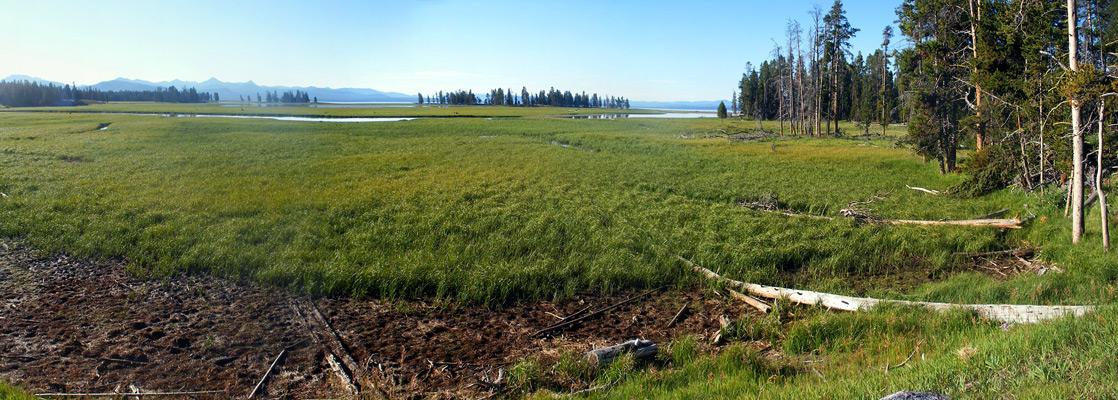
Pelican Creek
One of Yellowstone's shortest paths, looping through forest at the north edge of Yellowstone Lake, and running along the shoreline a little way. Good for bird watching and photographing the sunset
Length: 1 mile, round trip
Elevation change: Level
Difficulty: Easy
Type: Loop
Usage: High
Season: Spring, summer, fall
Trailhead: Pullout on the south side of US 14/16/20
Rating (1-5): ★★★★★
Elevation change: Level
Difficulty: Easy
Type: Loop
Usage: High
Season: Spring, summer, fall
Trailhead: Pullout on the south side of US 14/16/20
Rating (1-5): ★★★★★


The shortest hike in the Lake area of Yellowstone National Park is the one mile Pelican Creek loop, crossing a band of dense coniferous woodland to a sandy beach on the north edge of Yellowstone Lake. Attractions are the expansive views from the shoreline, the verdant old growth woodland en route, and the wildlife, in particular birds on the lake and bison on the marshy meadows to the east, which enclose the lower end of the creek.
Like other nearby locations including the similar but slightly longer Storm Point Trail 2 miles east, grizzly bears are often present in spring and early summer; the animals are also more of a problem along the Pelican Valley Trail, which starts just down the road and follows the creek northwards for many miles.
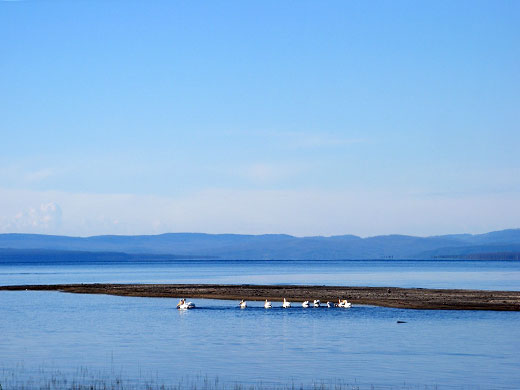
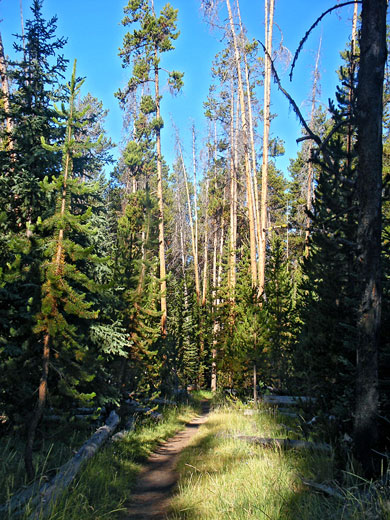
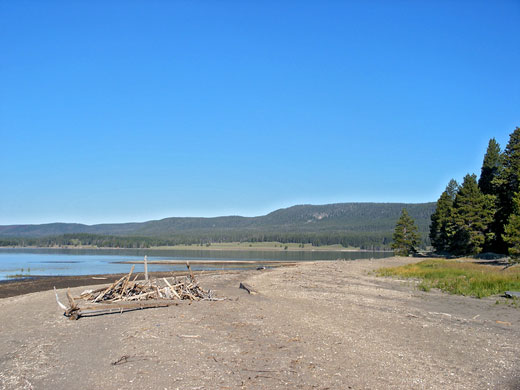
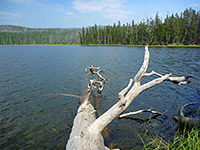
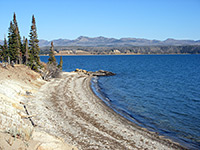
The Pelican Creek trailhead has a good-sized parking area in a pullout on the south side of the highway, 1.4 miles from Lake Junction. The path enters the woods right at the edge of the grassy, boggy ground bordering the creek, and soon splits; the left fork leads to a boardwalk that ends halfway across a marshy meadow, this being a disused earlier alignment of the trail, while the main route stays in the cool forest and soon arrives at the sandy/stony beach beside the lake. Sand bars appear at low water levels, separated by shallow pools and providing good habitat for birds; likely species include American white pelicans, cormorants, herons and geese. Views extend all across the lake, to Elephant Back Mountain and Stevenson Island in the west, Mount Sheridan to the south and the Absaroka Range in the east. The trail follows the edge of the beach for a short distance then enters the woods again and rejoins the entrance route beside the marshy meadow. The forest is old and undamaged by fire, with tall pines growing close together, mixed with many moss-covered logs from fallen trees, and quite a lot of undergrowth, all ideal conditions for foraging bears.
Like other nearby locations including the similar but slightly longer Storm Point Trail 2 miles east, grizzly bears are often present in spring and early summer; the animals are also more of a problem along the Pelican Valley Trail, which starts just down the road and follows the creek northwards for many miles.
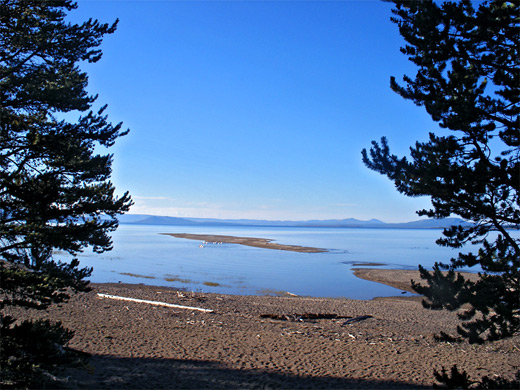
The Pelican Creek Trail
The Pelican Creek trailhead has a good-sized parking area in a pullout on the south side of the highway, 1.4 miles from Lake Junction. The path enters the woods right at the edge of the grassy, boggy ground bordering the creek, and soon splits; the left fork leads to a boardwalk that ends halfway across a marshy meadow, this being a disused earlier alignment of the trail, while the main route stays in the cool forest and soon arrives at the sandy/stony beach beside the lake. Sand bars appear at low water levels, separated by shallow pools and providing good habitat for birds; likely species include American white pelicans, cormorants, herons and geese. Views extend all across the lake, to Elephant Back Mountain and Stevenson Island in the west, Mount Sheridan to the south and the Absaroka Range in the east. The trail follows the edge of the beach for a short distance then enters the woods again and rejoins the entrance route beside the marshy meadow. The forest is old and undamaged by fire, with tall pines growing close together, mixed with many moss-covered logs from fallen trees, and quite a lot of undergrowth, all ideal conditions for foraging bears.
Pelican Creek Trail - Similar Hikes
All Contents © Copyright The American Southwest | Comments and Questions | Contribute | Affiliate Marketing Disclosure | Site Map