


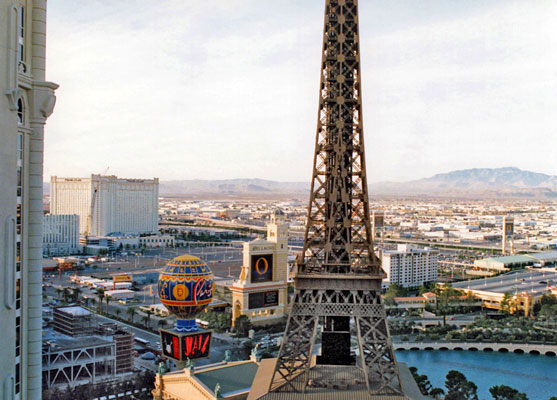
At average elevations of between 2,500 and 5,000 feet, the Mojave is higher than the adjacent, and warmer, Sonoran Desert to the south, and like all this region even Las Vegas (in a low valley, at 2,000 feet) can become quite cool during winter. Several days each year have frost, and every 5 years or so snow falls in the city, and tends to cause widespread traffic disruption though it might only last for a few hours before melting. But most days in winter are mild, with daytime temperatures in the 50s and 60s, so sunbathing and other outdoor activities are possible all through the season.
Las Vegas Weather Forecast
Average Las Vegas Weather Conditions
| Average High | Average Low | Mean | Average Rainfall | Record High | Record Low | |
| Jan | 57°F | 37°F | 47°F | 0.59 in | 80°F | 8°F |
| Feb | 63°F | 41°F | 52°F | 0.69 in | 89°F | 10°F |
| Mar | 69°F | 47°F | 58°F | 0.59 in | 96°F | 16°F |
| Apr | 78°F | 54°F | 66°F | 0.15 in | 102°F | 26°F |
| May | 88°F | 63°F | 75°F | 0.24 in | 114°F | 28°F |
| Jun | 99°F | 72°F | 86°F | 0.08 in | 117°F | 33°F |
| Jul | 104°F | 78°F | 91°F | 0.44 in | 117°F | 40°F |
| Aug | 102°F | 77°F | 89°F | 0.45 in | 116°F | 46°F |
| Sep | 94°F | 69°F | 81°F | 0.31 in | 113°F | 38°F |
| Oct | 81°F | 57°F | 69°F | 0.24 in | 103°F | 26°F |
| Nov | 66°F | 44°F | 55°F | 0.31 in | 89°F | 14°F |
| Dec | 57°F | 37°F | 47°F | 0.40 in | 91°F | 11°F |
| Average High | Average Low | Mean | Average Rainfall | Record High | Record Low | |
| Jan | 14°C | 3°C | 8°C | 1.5 cm | 27°C | -13°C |
| Feb | 17°C | 5°C | 11°C | 1.8 cm | 32°C | -12°C |
| Mar | 21°C | 8°C | 14°C | 1.5 cm | 36°C | -9°C |
| Apr | 26°C | 12°C | 19°C | 0.4 cm | 39°C | -3°C |
| May | 31°C | 17°C | 24°C | 0.6 cm | 46°C | -2°C |
| Jun | 37°C | 22°C | 30°C | 0.2 cm | 46°C | 1°C |
| Jul | 40°C | 26°C | 33°C | 1.1 cm | 48°C | 4°C |
| Aug | 39°C | 25°C | 32°C | 1.1 cm | 47°C | 8°C |
| Sep | 34°C | 21°C | 27°C | 0.8 cm | 45°C | 3°C |
| Oct | 27°C | 14°C | 21°C | 0.6 cm | 39°C | -3°C |
| Nov | 19°C | 7°C | 13°C | 0.8 cm | 32°C | -10°C |
| Dec | 14°C | 3°C | 8°C | 1.0 cm | 33°C | -12°C |
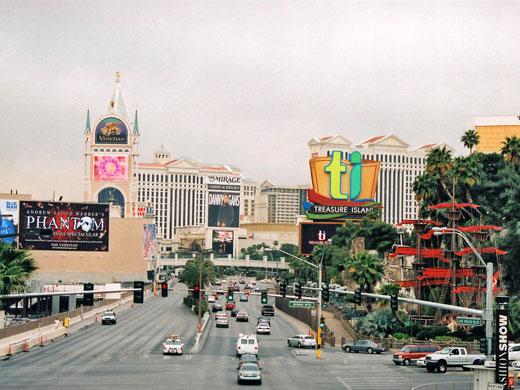
Las Vegas Climate
The weather in Las Vegas starts to heat up quickly from around March/April, and usually passes 100°F for the first time in May, remaining liable to be above 100° until mid September. The months of June, July and August are always hot, and if the temperature does rise much above 100, it is usually not until well after midnight it begins to decrease very much, though low points, even in mid summer nights, are in the 70s. The big variation between high and low over the course of one day is quite typical for deserts, and the difference can be even more marked in winter. The highest temperature ever recorded in Las Vegas is 117°F (47°C), a record that has stood since 1942 though was equalled on July 19th 2005, on June 20th 2017, and again on July 10th 2021.
An average of 310 days each year are sunny in Las Vegas, though rain usually falls at least once in every month; most occurs in two periods, over the winter months then in the late summer thunderstorm season, where days typically start and end completely clear but storm clouds quickly build up during the afternoon, followed by a brief, heavy downpour before clearing at sunset. These rains may cause flash floods in the surrounding desert but don't pose any problems in the city; the only downside of the weather in Las Vegas is the excessive heat of summer.
All Contents © Copyright The American Southwest | Comments and Questions | Contribute | Affiliate Marketing Disclosure | Site Map